

Author: Planevision Systems

  • What is UAT?

    Universal Access Transceiver – 978 MHz

    Introduction

    Universal Access Transceiver (UAT) is a datalink technology operating on the 978 MHz frequency band, originally developed for aviation surveillance and communication in the United States. UAT serves as an alternative to the 1090 MHz Extended Squitter (1090ES) system for ADS-B compliance, providing general aviation pilots with a cost-effective path to meet surveillance mandates while receiving valuable free services not available on 1090ES.

    Unlike 1090ES, which shares frequency with Mode S transponders used worldwide, UAT operates on a dedicated frequency specifically allocated for aviation data services. This dedicated spectrum enables UAT to support not only ADS-B position broadcasting but also uplink services that deliver weather information and traffic data directly to the cockpit — capabilities that have made UAT particularly popular among general aviation pilots.

    In a historic development, the United Kingdom became the first country outside the United States to authorize 978 MHz UAT in March 2025, specifically for drone operations. This decision marks a significant expansion of UAT beyond its American origins and signals growing international recognition of the technology’s value for unmanned aircraft systems.

    Key Advantage: UAT provides free FIS-B weather and TIS-B traffic services in the cockpit — benefits that 1090ES alone cannot offer — and is now expanding internationally for drone applications.

    History and Development

    The development of UAT began in the late 1990s as the FAA explored options for implementing ADS-B across the diverse U.S. aviation fleet. While 1090ES was the logical choice for air carriers already equipped with Mode S transponders, the general aviation community — with its large fleet of smaller, often older aircraft — needed a more affordable solution.

    In 2002, the FAA announced its dual-link decision, establishing a two-frequency approach to ADS-B: 1090ES for aircraft operating at and above 18,000 feet (Class A airspace) and high-performance aircraft, and 978 MHz UAT for aircraft operating below 18,000 feet. This decision recognized the different needs and economic realities of commercial aviation versus general aviation.

    The technical standards for UAT were developed through RTCA Special Committee 186 and published as DO-282, with subsequent revisions (DO-282A and DO-282B) refining the specifications. These standards define the Minimum Operational Performance Standards (MOPS) for UAT equipment. The current standard is DO-282B, with DO-282C expected to become the reference standard from 2027.

    The ADS-B mandate that took effect on January 1, 2020, required aircraft operating in most controlled U.S. airspace to be equipped with ADS-B Out. For general aviation aircraft operating below 18,000 feet, UAT became the predominant choice due to its lower cost and additional benefits.


    How UAT Works

    UAT operates as a bidirectional datalink, supporting both ground-to-air (uplink) and air-to-ground/air-to-air (broadcast) communications. This bidirectional capability distinguishes UAT from 1090ES, which only supports aircraft broadcasts without any uplink services.

    System Architecture

    The UAT system consists of three main components working together:

    Aircraft Equipment: UAT transceivers aboard aircraft receive GPS position data and broadcast ADS-B Out messages. Transceivers with ADS-B In capability can also receive broadcasts from other aircraft and uplink services from ground stations.

    Ground Infrastructure: A network of ground stations receives UAT broadcasts for surveillance purposes and transmits uplink services (FIS-B and TIS-B) to equipped aircraft.

    ADS-B Services: Automation systems process the surveillance data and, where TIS-B is needed, generate traffic broadcasts to provide a complete traffic picture regardless of which frequency individual aircraft use.

    Message Transmission

    UAT uses a time-division structure that organizes transmissions into one-second frames. Each frame is divided into segments for different purposes:

    • Ground Uplink Segment (GUS): Reserved for FIS-B and TIS-B transmissions from ground stations
    • ADS-B Segment: Reserved for aircraft ADS-B broadcasts
    • Guard Times: Buffer periods (6-12 milliseconds) that allow for signal propagation and timing synchronization

    Within the ADS-B segment, transmissions are organized into Message Start Opportunities (MSOs) spaced 250 microseconds apart. Each aircraft randomly selects an available MSO for its transmission, using a listen-before-transmit approach to minimize collisions.


    Technical Specifications

    Radio Characteristics

    ParameterSpecification
    Frequency978 MHz
    BandwidthApproximately 1.3 MHz
    ModulationCPFSK (Continuous Phase Frequency Shift Keying)
    Bit Rate1.041667 Mbps
    Frequency Deviation±312.5 kHz (625 kHz separation between 0 and 1)
    Symbol Period0.96 microseconds
    Update RateOnce per second (ADS-B position)

    Message Structure

    UAT messages contain information similar to 1090ES ADS-B but in a different format optimized for the higher bandwidth available on 978 MHz. The basic ADS-B message includes aircraft address (24-bit ICAO identifier), position (latitude, longitude, altitude), velocity (ground speed, vertical rate, heading), aircraft identification (callsign or tail number), quality indicators (NACp, NACv, NIC, SIL), and aircraft category with operational status.

    The higher data rate of UAT compared to 1090ES allows for longer messages with additional content, including the auxiliary state vector with vertical rate and heading information in every transmission.


    UAT Services: FIS-B and TIS-B

    One of UAT’s most significant advantages over 1090ES is its support for uplink services that deliver valuable information directly to the cockpit — completely free of charge.

    FIS-B: Flight Information Service – Broadcast

    FIS-B delivers real-time weather and aeronautical information to equipped aircraft, including NEXRAD radar imagery (composite and regional precipitation updated every 2.5-5 minutes), METARs and TAFs from airports within the coverage area, PIREPs (pilot weather reports), SIGMETs and AIRMETs, NOTAMs, winds and temperatures aloft, and temporary flight restrictions (TFRs).

    This information, which would otherwise require expensive satellite weather subscriptions, is broadcast continuously by FAA ground stations to any aircraft equipped with a UAT receiver — making FIS-B one of the most compelling reasons for general aviation pilots to choose UAT.

    TIS-B: Traffic Information Service – Broadcast

    TIS-B addresses the interoperability gap between UAT and 1090ES-equipped aircraft. Since UAT receivers cannot directly receive 1090ES transmissions (and vice versa), TIS-B ground stations serve as intermediaries — receiving ADS-B transmissions from both frequency bands and rebroadcasting traffic information so pilots with ADS-B In capability can see a comprehensive traffic picture including aircraft on the other frequency.


    UAT vs. 1090ES Comparison

    Characteristic978 MHz UAT1090 MHz ES
    Frequency978 MHz (dedicated)1090 MHz (shared with Mode S)
    Altitude Limit (US)Below 18,000 ft MSLNo limit
    Geographic UseUS (manned); UK (drones from 2025)Worldwide
    Weather ServicesFIS-B included (free, US only)Not available
    Traffic UplinkTIS-B includedTIS-B (requires UAT ground infrastructure)
    Spectrum CongestionSignificantly underutilizedCan become congested in high-traffic areas
    Drone ApplicationsAuthorized (UK BVLOS from 2025)Standard use

    UK Adoption: UAT for Drones

    In a landmark decision, the UK Civil Aviation Authority (CAA) and Ofcom jointly announced on March 11, 2025, that 978 MHz would be made available for airborne transmission onboard Unmanned Aircraft Systems (UAS). This represents the very first authorization of 978 MHz UAT ADS-B outside of the United States, placing the UK at the forefront of global aviation technology.

    Regulatory Framework

    The authorization was implemented through a Supplementary Amendment to CAP 1391 (Electronic Conspicuity Devices), which authorizes the use of 978 MHz UAT for airborne transmission onboard UAS applications under the RTCA minimum performance standards DO-282B. The CAA expects DO-282C to become the standard from 2027.

    Ofcom introduced a new UAS Operator Radio licence to authorize the use of radio equipment on drones. This licence covers all drones a company or individual operates in the UK and territorial waters, with an annual fee of £75 and indefinite duration subject to payment.

    Purpose and Benefits for Drones

    The use of UAT on 978 MHz brings significant advantages for Beyond Visual Line of Sight (BVLOS) drone operations. UAT allows drones to be “seen” by other aircraft and provides necessary tracking and communication capabilities over long distances, reducing the risk of mid-air collisions. This is essential for BVLOS operations where the drone pilot cannot rely on direct visual observation.

    A key factor in choosing 978 MHz for UAS is that the frequency is significantly underutilized compared to the congested 1090 MHz band used by commercial aviation. This makes it an ideal frequency for safely accommodating emerging drone operations without adding burden to existing manned aviation surveillance infrastructure.

    Technical Requirements

    Under CAP 1391, Specific Category UAS operating BVLOS in non-segregated airspace must be equipped to both transmit on 978 MHz UAT and receive ADS-B on both 1090 MHz and 978 MHz for proper situational awareness. This dual-receive requirement ensures drone operators can see all equipped traffic regardless of which ADS-B frequency other aircraft use.

    Spectrum Sharing Changes

    To accommodate UAT operations, Ofcom and the CAA agreed to update spectrum availability for Programme Making and Special Events (PMSE) equipment. Low-power radio microphones will no longer be licensed for outdoor events between 976.5 and 979.5 MHz. Indoor PMSE use continues, as the likelihood of interference into UAT in indoor situations is negligible.


    Future Developments

    The UK’s adoption of 978 MHz UAT for drones represents a potential inflection point for the technology’s international expansion. As other countries observe the UK’s implementation and its support for safe BVLOS operations, additional jurisdictions may follow suit, particularly for UAS applications where the underutilized 978 MHz spectrum offers advantages over the congested 1090 MHz band.

    The CAA’s CAP 3182 – Future of Flight: BVLOS Roadmap sets a clear direction for routine BVLOS operations by 2027 across priority use cases including NHS medical deliveries, emergency services, and infrastructure inspection. UAT equipage requirements are central to this roadmap, with ADS-B In/Out on both 978 MHz and 1090 MHz progressively moving from trials to standard approvals.

    In the United States, the FAA continues to invest in UAT ground infrastructure, and the general aviation community remains committed to the technology. Potential future developments include enhanced FIS-B products with additional weather content, improved TIS-B coverage, and integration with unmanned traffic management (UTM) systems.


    Conclusion

    UAT represents a versatile aviation surveillance technology that has proven its value for general aviation in the United States and is now expanding internationally through drone applications. For U.S. pilots operating domestically below 18,000 feet, UAT offers unmatched value through free weather and traffic services. For the emerging drone industry, particularly in the UK, 978 MHz UAT provides a dedicated, underutilized frequency band ideally suited for safe BVLOS operations.

    The UK’s historic decision to authorize 978 MHz UAT in March 2025 signals that this technology may have a broader international future than previously anticipated. As drone operations become increasingly sophisticated and widespread, the demand for reliable electronic conspicuity solutions that don’t burden existing manned aviation infrastructure will only grow — positioning UAT as a key enabler for the future of integrated airspace.

    Historic Milestone: The UK’s March 2025 authorization of 978 MHz UAT for drones marks the first international adoption of this technology outside the United States — a potential turning point for UAT’s global relevance.
  • What is ADS-L?

    Automatic Dependent Surveillance – Light

    Introduction

    ADS-L, or Automatic Dependent Surveillance – Light, is an innovative surveillance protocol developed by the European Union Aviation Safety Agency (EASA) to enable low-cost, low-power devices to transmit position and flight data. The “Light” designation reflects its design philosophy: affordable, lightweight, and energy-efficient electronic conspicuity for aircraft that cannot justify the cost or complexity of traditional certified surveillance equipment.

    As drone operations continue to expand and share airspace with manned aircraft, the need for universal electronic visibility has become critical. ADS-L addresses this challenge by providing a unified, cost-effective solution for general aviation (GA) aircraft, ultralight aircraft, gliders, paragliders, and other vehicles that traditionally lacked affordable means to be electronically visible.

    Key Point: ADS-L makes electronic conspicuity accessible to all airspace users at a fraction of the cost of certified ADS-B equipment.

    History and Development

    The development of ADS-L emerged from the increasing integration of unmanned aircraft systems (UAS) into European airspace. In 2021, the European Commission implemented Regulation (EU) 2021/666, which amended SERA.6005 — the article governing transponder and radio requirements in certain airspace. This regulation introduced the concept of U-space, a framework designed to enable safe, efficient, and secure integration of drones into airspace used by manned aircraft.

    SERA.6005(c) specifically requires that manned aircraft operating in airspace designated as U-space must continuously make themselves electronically conspicuous to U-space service providers. This regulatory mandate drove the need for an affordable electronic conspicuity solution, leading EASA to develop the ADS-L standard.

    In late 2022, EASA published ED Decision 2022/022/R and ED Decision 2022/024/R, which established the technical specifications for ADS-L transmissions. The first version (ADS-L 4 SRD860 Issue 1) was followed by Issue 2 in 2024, which introduced enhanced features including ground-to-air data transmission capabilities and improved interoperability with Remote ID standards for drones.


    How ADS-L Works

    ADS-L operates on principles similar to ADS-B (Automatic Dependent Surveillance – Broadcast), but with significant simplifications that reduce cost and power requirements. Like ADS-B, ADS-L is:

    • Automatic — no pilot input required during operation
    • Dependent — relies on GNSS for position data
    • Surveillance — broadcasts aircraft information for traffic awareness

    Core Components

    An ADS-L implementation requires three critical components:

    GNSS Receiver: Provides accurate 3D positioning and timing information. Unlike ADS-B, ADS-L does not require barometric altitude, simplifying the equipment requirements.

    Host Processor: Handles the ADS-L protocol processing, message encoding, and transmission scheduling.

    RF Frontend: Transmits the encoded ADS-L messages on the designated SRD860 frequency band.

    Data Transmission

    ADS-L broadcasts essential flight information including aircraft identification, position, GNSS altitude, heading, speed, and flight status (in-flight, climbing, descending, or on ground). The protocol uses Manchester encoding to ensure reliable data transmission by converting bits into specific signal transitions, facilitating synchronization between sender and receiver. CRC (Cyclic Redundancy Check) encoding provides error detection for data integrity verification.


    Technical Specifications

    Frequency Bands

    ADS-L operates on the SRD860 (Short Range Device 860 MHz) frequency band, utilizing three specific frequencies:

    M-Band: 868.2 MHz and 868.4 MHz — ADS-L transmitters alternate between these frequencies for each transmission to optimize spectrum usage.

    O-Band: 869.525 MHz — Used for higher-power transmissions.

    Transmission Power

    ADS-L transmission power is deliberately limited to enable use of unlicensed spectrum:

    • M-Band: 14 dBm (25 mW ERP)
    • O-Band: 27 dBm (500 mW)

    While these power levels are significantly lower than ADS-B, ADS-L can still achieve air-to-air ranges exceeding 10 kilometers under favorable conditions, making it suitable for its intended low-altitude, local traffic awareness applications.

    Protocol Architecture

    The ADS-L protocol specification (ADS-L.4.SRD860) defines:

    • Physical Layer: Manchester encoding, preamble sequences, and sync words for reliable RF transmission
    • Data Link Layer: Frame structure, packet length definitions, and CRC error detection
    • Message Types: Standard position reports and additional payload types supporting future use cases such as traffic rebroadcasting, weather information, and hazard notifications

    ADS-L vs ADS-B: Key Differences

    While ADS-L and ADS-B share conceptual similarities, they serve different purposes and have distinct characteristics:

    CharacteristicADS-BADS-L
    Frequency1090 MHz (Mode S)868-869 MHz (SRD860)
    Transmission PowerUp to 500W25 mW – 500 mW
    Range100+ nautical miles10+ kilometers
    CertificationRequired (TSO certified)Not required
    Barometric AltitudeRequiredNot required
    CostHigh ($2,000 – $10,000+)Low ($100 – $500)
    Primary UseATC surveillance, IFR operationsGA conspicuity, U-space

    ADS-L transmits parameters compatible with ADS-B message definitions, ensuring that systems can interpret both data types. However, the deliberate omission of the “B” (Broadcast) from ADS-L anticipates future network-based communications via 4G and 5G cellular networks.


    Advantages and Benefits

    Enhanced Safety for General Aviation

    Mid-air collisions remain a significant risk in general aviation, with EASA Member States averaging 6 fatal collisions annually, resulting in approximately 13 deaths per year. ADS-L addresses this by making aircraft electronically visible to other equipped aircraft and ground systems, regardless of weather conditions or pilot visual limitations.

    Cost-Effective Alternative

    Traditional Traffic Collision Avoidance Systems (TCAS) are prohibitively expensive and heavy for small aircraft. ADS-L provides similar situational awareness benefits at a fraction of the cost, making electronic conspicuity accessible to private pilots, glider operators, paraglider pilots, and ultralight aircraft owners.

    Drone Integration

    ADS-L facilitates safe coexistence of manned and unmanned aircraft by enabling mutual visibility. Ground stations can rebroadcast Remote ID information from drones via ADS-L, providing GA pilots with awareness of drone operations in their vicinity.

    Firmware Upgradability

    Many existing electronic conspicuity devices, such as PowerFLARM units, can be upgraded to support ADS-L through firmware updates. This allows pilots to add ADS-L capability to existing equipment without purchasing entirely new devices.


    Limitations and Challenges

    Limited Range

    Due to power restrictions on the SRD860 band, ADS-L has significantly shorter range than ADS-B. This makes it most suitable for low-altitude operations and local traffic awareness rather than en-route surveillance.

    No ATC Recognition

    ADS-L is currently not recognized by Air Traffic Management (ATM) services in EASA countries. Aircraft equipped only with ADS-L cannot be tracked by air traffic control, limiting its use to pilot-to-pilot awareness and U-space service provider visibility.

    Equipment Adoption

    The effectiveness of any electronic conspicuity system depends on widespread adoption. Aircraft not equipped with ADS-L remain invisible to ADS-L receivers, creating potential blind spots in situational awareness.

    Interoperability Complexity

    The European electronic conspicuity landscape includes multiple protocols (ADS-B, FLARM, ADS-L, PilotAware, etc.), creating a complex environment where pilots may need multiple receivers to achieve comprehensive traffic awareness.


    Implementation and Compatible Devices

    Several device manufacturers have announced or released ADS-L compatible products:

    FLARM Technology: PowerFLARM Core, PowerFLARM Fusion, and PowerFLARM Portable devices support ADS-L via firmware update (version 7.24 or later). An ADS-L activation extension must be purchased separately.

    LX Navigation: PowerFLARM Eagle, based on PowerFLARM OEM modules, can be upgraded to support ADS-L.

    Third-Party Manufacturers: Products based on PowerFLARM modules from various manufacturers can typically be upgraded to ADS-L capability.

    EASA expects a wide variety of devices, including portable systems, installed units, and mobile applications, to support ADS-L as the ecosystem matures.


    Regulatory Framework

    U-Space Requirements

    Under SERA.6005(c), manned aircraft operating in designated U-space airspace must be electronically conspicuous to U-space service providers. ADS-L is one of the accepted means of compliance, alongside certified ADS-B Out solutions. The EU U-space regulation (EU) 2021/664 became applicable on 26 January 2023.

    No General Mandate

    There are currently no mandates requiring the use of ADS-L outside of U-space airspace. However, EASA and the ADS-L Coalition actively promote voluntary adoption as an essential means of improving aviation safety.

    ADS-L Coalition

    EASA has established the ADS-L Coalition, a collaborative forum bringing together technology providers, aircraft manufacturers, operators, and user associations. The coalition aims to support harmonized implementation, promote innovation, and maintain alignment between regulators and industry on ADS-L developments.


    Future Developments

    Version 3 and Remote ID Integration

    ADS-L Version 2 prepared the groundwork for Remote ID integration. Starting with Version 3, drones may be able to use the ADS-L radio system for Remote ID transmission, potentially eliminating the drawbacks of current Remote ID technologies and providing unified airspace surveillance.

    Network-Based ADS-L

    Future specifications will enable ADS-L transmission over mobile networks such as 4G and 5G. This “networked” variant will complement broadcast ADS-L, providing coverage in areas with cellular connectivity and enabling new applications such as real-time position sharing via internet infrastructure.

    Ground-to-Air Services

    Version 2 introduced provisions for ground-to-air data transmission. Future implementations may leverage this capability to uplink traffic information, weather data, hazard notifications, and other aeronautical information directly to aircraft via the ADS-L protocol.

    Enhanced Interoperability

    Ongoing development focuses on improving interoperability between ADS-L, ADS-B, and other electronic conspicuity systems. The goal is to create a comprehensive traffic picture regardless of which specific technology individual aircraft use, ultimately reducing the complexity of the current fragmented landscape.


    Conclusion

    ADS-L represents a significant step forward in making electronic conspicuity accessible to all airspace users. By providing an affordable, lightweight, and energy-efficient alternative to certified ADS-B installations, ADS-L enables general aviation pilots, glider operators, and ultralight enthusiasts to enhance their situational awareness and contribute to safer skies.

    As U-space becomes increasingly important for drone integration, and as the ADS-L ecosystem continues to mature with new devices, features, and capabilities, electronic conspicuity will become the norm rather than the exception in European airspace. The ultimate vision is a future where every aircraft, manned or unmanned, large or small, is visible to every other airspace user — fundamentally transforming aviation safety through universal electronic visibility.

    Remember: “See and be seen” — ADS-L makes this principle achievable for everyone who takes to the skies.

  • What is Remote ID?

    As drones become part of everyday life—from filmmaking to infrastructure monitoring—Remote Identification (Remote ID) has emerged as a vital safety and accountability tool. Often called a “digital license plate,” Remote ID lets drones broadcast or transmit their identity and flight data in real time, ensuring they’re visible to airspace authorities, law enforcement, and other users.

    Remote ID is now mandatory in many countries, including the United States, European Union, Japan, and others, supporting the safe integration of drones into increasingly crowded skies.

    How It Works

    Remote ID uses Bluetooth or Wi-Fi to send data—like drone ID, position, and controller location—to nearby receivers, accessible via smartphones or dedicated devices, with a typical range of a few 100 meters, depending on antenna location.

    Who Uses Remote ID and Why

    • Aviation regulators manage airspace and enforce rules.
    • Law enforcement identifies drones during incidents or near restricted areas.
    • Air traffic systems coordinate drones with crewed aircraft.
    • Commercial operators use it for fleet tracking and compliance.
    • Public safety agencies distinguish friendly drones from threats

    Technology and Benefits

    Remote ID integrates with systems like ADS-B, FLARM, and counter-UAS technologies, enhancing both local and national airspace awareness. It supports safe urban operations, BVLOS flights, and public trust by linking drones to responsible operators.

    Conclusion

    Remote ID is essential to modern drone operations. It enables safe skies, fosters accountability, and underpins the future of Urban Air Mobility and autonomous flight. As regulations mature and technologies advance, Remote ID ensures drones operate securely, visibly, and in harmony with other airspace users.

  • What is FLARM?

    FLARM is a compact, intelligent collision avoidance and situational awareness system originally developed for gliders and light aircraft, and now widely adopted in helicopters, UAVs, and even ground vehicles in industrial environments. FLARM works by broadcasting an aircraft’s (or vehicle’s) position, velocity, and flight path over short-range radio, enabling nearby equipped units to predict potential conflicts and issue real-time alerts.

    Originally designed to fill the gap left by radar and ADS-B in low-level, VFR airspace, FLARM provides a decentralized, low-cost, and privacy-conscious solution to traffic awareness and deconfliction—particularly in areas where conventional air traffic control is unavailable.


    How It Works

    Each FLARM unit uses GNSS (e.g., GPS) to determine position, altitude, and motion, which it then transmits over a license-free ISM band (typically 868 MHz in Europe or 915 MHz in North America). A built-in collision prediction algorithm continuously computes possible future trajectories of both the ownship and received targets, triggering audio and visual alerts if a collision risk is detected.

    Key transmission data includes:

    • 3D position and velocity
    • Heading and rate of climb/descent
    • Aircraft or asset ID (can be anonymized)
    • Optional intent (planned trajectory or destination)

    The communication range is typically 3–10 km, depending on antenna quality and line-of-sight.


    Broader Ecosystem – Other Compatible and Competing Systems

    FLARM is part of a growing ecosystem of airborne traffic awareness technologies, many of which use different protocols and frequencies. Some of these systems are partially or fully interoperable with FLARM, while others require integration via ground relays or bridging devices:

    • PilotAware: A UK-developed system aimed at general aviation. It detects and broadcasts over both FLARM and ADS-B frequencies, and can bridge multiple traffic formats including Mode S and FLARM, increasing awareness of nearby non-cooperative targets via ground stations.
    • ADS-L (Airborne Dependent Surveillance – Local): An emerging EASA standard designed for low-cost electronic conspicuity, particularly for drones and light aircraft. ADS-L supports encrypted broadcasts and is expected to be compatible with certain FLARM-based systems under a harmonized framework.
    • OGN (Open Glider Network): A community-driven network that aggregates live FLARM, FANet, and other telemetry data via a network of ground receivers. OGN tracks aircraft in real time and provides online visibility through platforms like LiveTrack24 and GliderNet. While FLARM data is integrated, full protocol-level compatibility depends on device configuration.
    • FANet (Flying Ad-Hoc Network): A lightweight broadcast system developed for paragliders, hang gliders, and drones. It uses similar frequencies and packet structures to FLARM but with different protocols. FANet devices can sometimes be integrated with FLARM via dual-protocol transceivers or OGN bridges.

    Together, these systems form a diverse ecosystem aimed at increasing electronic conspicuity and airspace safety for all types of low-level aviation.


    Beyond Aviation – FLARM in Industrial Tracking

    FLARM is not limited to aircraft. In recent years, it has been successfully adopted for ground-based asset tracking in mining, logistics, and construction. For example, ore trucks in copper mines use FLARM to broadcast their positions and receive alerts from nearby vehicles, reducing collision risk in dust-filled or visually obstructed environments. The same benefits apply to bulldozers, forklifts, and other heavy equipment operating in dynamic, high-risk areas.


    Conclusion

    FLARM provides an effective, decentralized solution for real-time collision avoidance, situational awareness, and asset tracking—both in the air and on the ground. While alternative systems like PilotAware, ADS-L, OGN, and FANet offer overlapping functionality, they often target specific user groups or regulatory frameworks. Whether integrated natively or bridged via ground networks, FLARM remains a cornerstone technology for safe operation in complex, radar-free environments.d technologies, we recognize the significant contribution of FLARM to enhancing flight safety.

  • What is AIS?

    What is AIS?

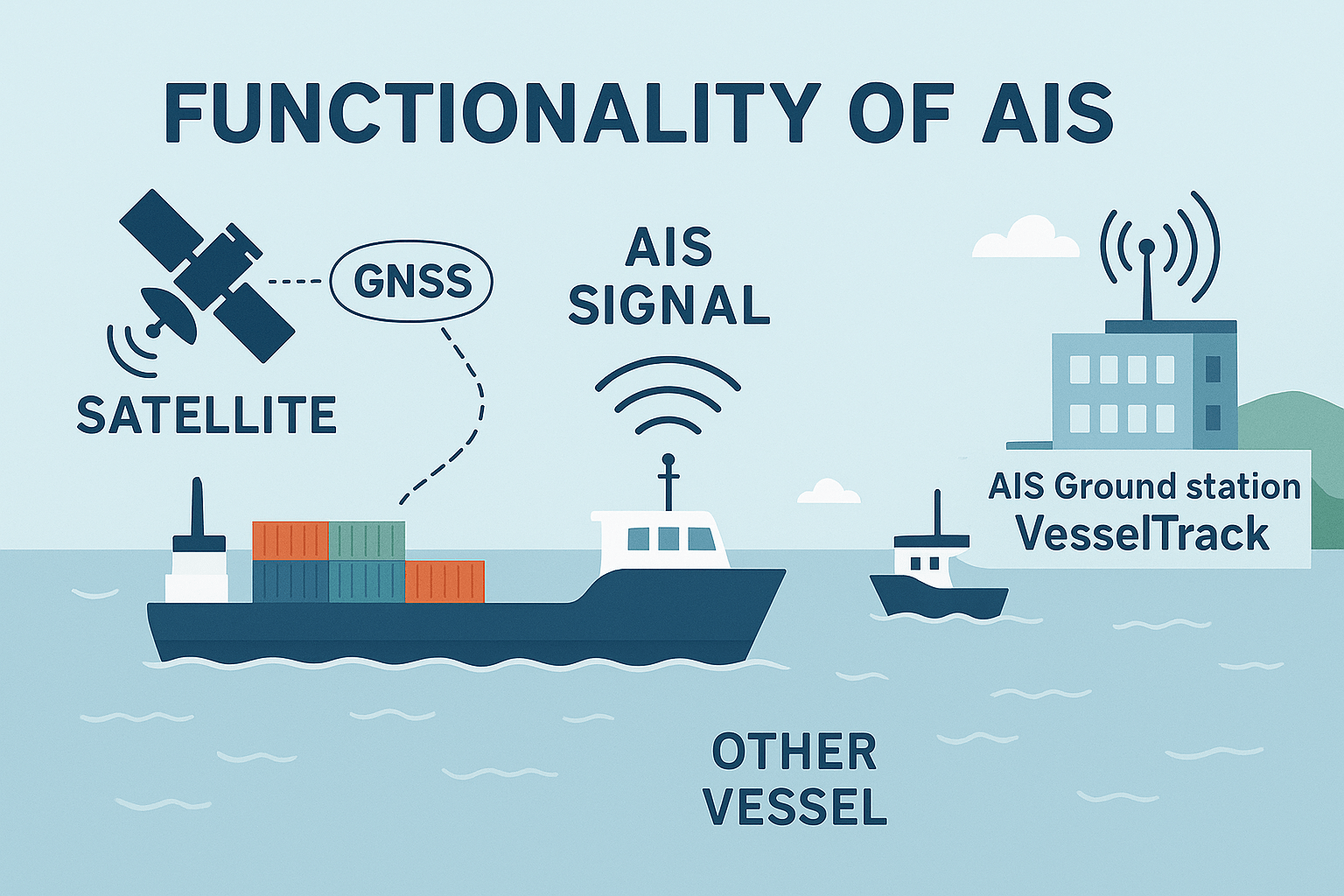
    The Automatic Identification System (AIS) is a standardized maritime communication system that enables vessels to automatically broadcast critical information such as identity, position, course, and speed over VHF radio. Originally developed for collision avoidance, AIS has become a central pillar of maritime safety, navigation, and operational oversight.

    The International Maritime Organization (IMO) mandates AIS carriage for:

    • All passenger ships
    • All commercial vessels ≥300 gross tonnage on international voyages
    • Cargo ships ≥500 gross tonnage on domestic voyages

    Smaller and recreational vessels may carry Class B AIS, which operates at lower transmission power and with reduced update rates.


    How AIS Works – Technical Overview

    AIS operates on VHF maritime channels (161.975 MHz and 162.025 MHz), using GMSK modulation and a 9.6 kbps data rate. Two main types of AIS transceivers exist:

    • Class A (required for large vessels): Uses SOTDMA, transmits every 2–10 seconds while moving.
    • Class B (optional for smaller vessels): Uses CSTDMA, transmits every 30 seconds to 3 minutes.

    Each transmission includes standardized messages covering:

    • Static data: MMSI, ship name, call sign, vessel type
    • Dynamic data: Position, speed, course, heading
    • Voyage data: ETA, draft, destination
    • Binary messages: Alerts, weather reports, Aids-to-Navigation (AtoN) info

    Transmission range typically spans 20–40 nautical miles via line-of-sight VHF, and can extend globally through Satellite AIS (S-AIS).


    Who Uses AIS Data – And Why

    AIS data is invaluable to a wide array of users across the public, private, and defense sectors:

    • Commercial Vessels and Ship Captains use AIS to improve navigational safety, especially in crowded sea lanes or poor visibility. Real-time awareness of nearby ships helps prevent collisions and reduces reliance on radar alone.
    • Port Authorities and Vessel Traffic Services (VTS) rely on AIS to monitor ship movements, manage docking schedules, and optimize port operations. By tracking vessels approaching and leaving ports, they can reduce congestion and improve turnaround times.
    • Coast Guards, Border Agencies, and Navies use AIS for maritime surveillance, search and rescue coordination, and maritime security enforcement. Knowing the real-time position and identity of vessels aids in detecting suspicious behavior and responding quickly to emergencies.
    • Fleet Operators and Shipping Companies monitor AIS data to manage logistics, plan routes, optimize fuel use, and analyze vessel performance. AIS-based analytics also support predictive maintenance and supply chain coordination.
    • Environmental Agencies and Researchers use AIS to study maritime traffic patterns, assess the impact on marine ecosystems, and monitor activity in protected or restricted zones.
    • Insurance Companies and Investigators analyze AIS records post-incident to reconstruct maritime accidents, verify claims, and evaluate liability.

    The Strategic Role of Industrial and Defense AIS Ground Stations

    While satellite AIS enables global coverage, terrestrial AIS ground stations—especially those designed for industrial or defense applications—offer key advantages:

    1. High-Resolution Data: Ground stations can receive AIS signals with higher fidelity, frequency, and spatial accuracy compared to satellite downlinks. This is critical for time-sensitive decisions near coasts, harbors, and strategic chokepoints.
    2. Low Latency: Terrestrial stations provide real-time or near-real-time data without relying on orbital passes, ensuring instant situational awareness for dynamic environments like port approaches, conflict zones, or exclusive economic zones (EEZs).
    3. Data Control and Security: Defense-grade AIS infrastructure ensures that data remains within secure networks, protecting sensitive movement patterns of naval and commercial vessels from interception or manipulation.
    4. Integration with Radar and Sensors: Industrial ground stations can be co-located with radar, cameras, and other maritime sensors, creating a fused picture of vessel activity that is more complete and reliable.
    5. Critical Infrastructure Monitoring: Governments and private operators use AIS ground stations to monitor traffic around oil platforms, undersea cables, naval bases, and shipping lanes, where precision and control are paramount.

    Conclusion

    AIS is far more than a collision avoidance tool—it is a vital component of global maritime infrastructure. From enabling safe navigation and port efficiency to empowering defense and intelligence operations, AIS serves diverse strategic needs. When paired with industrial or defense-grade ground stations, the system delivers unparalleled value in real-time situational awareness, maritime security, and national sovereignty.

    Our products for AIS

  • What is ADS-B?

    What is ADS-B?

    Understanding Automatic Dependent Surveillance–Broadcast (ADS-B): A Foundational Technology in Modern Aviation

    In the sphere of modern aviation, precision, safety, and efficiency are paramount. A cornerstone technology enabling advancements in these areas is Automatic Dependent Surveillance–Broadcast, commonly known as ADS-B. 

    Defining ADS-B: A Technical Overview

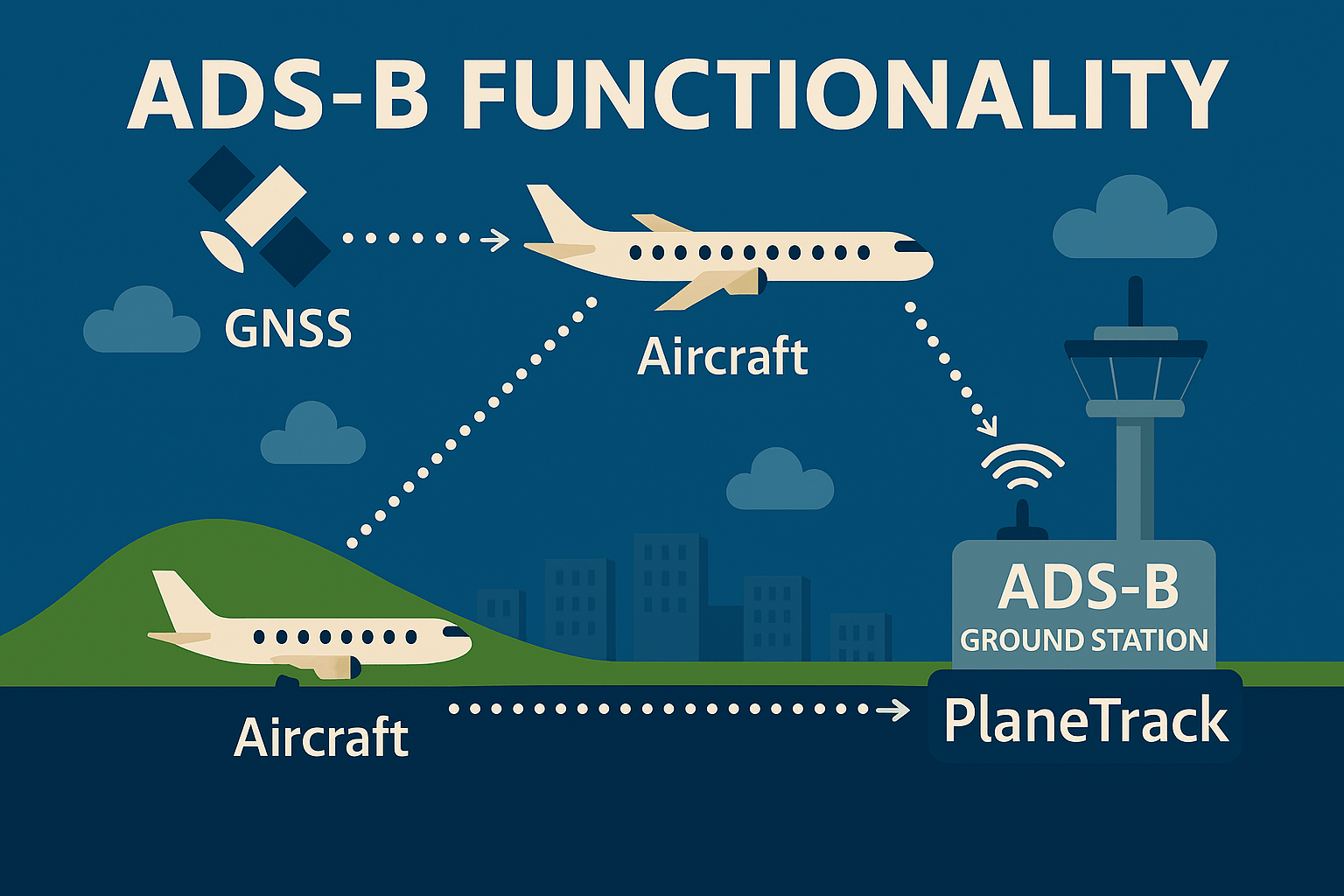
    ADS-B is an advanced surveillance technology that allows aircraft to automatically transmit flight information without pilot or controller intervention. The acronym itself provides a concise summary of its function:

    • Automatic: The system operates autonomously, requiring no manual input from the flight crew for its primary surveillance function.
    • Dependent: The accuracy of the broadcast data relies on the aircraft’s own navigation systems, principally the Global Navigation Satellite System (GNSS), such as GPS, to determine its precise position.
    • Surveillance: It provides a method of observing and tracking aircraft, replacing or augmenting traditional radar systems.
    • Broadcast: Aircraft periodically transmit their data (including identity, GNSS-derived position, altitude, velocity, and other parameters) to any suitably equipped receivers.

    This broadcast information is accessible to Air Traffic Control (ATC) ground infrastructure, and dedicated ADS-B receiving units, industrial and defense ground stations and other interested users.

    Operational Mechanics of ADS-B

    Aircraft equipped with an “ADS-B Out” transponder utilize their onboard GNSS receiver to ascertain their precise geographical coordinates. This positional data, along with other vital flight parameters, is then typically broadcast once per second via a digital data link, commonly on the 1090 MHz frequency (known as 1090ES or 1090 MHz Extended Squitter).

    The system comprises two main components:

    • ADS-B Out: This refers to the aircraft’s capability to transmit its state vector (position, velocity, etc.) and other information. Regulatory bodies worldwide have increasingly mandated ADS-B Out equipage for aircraft operating within designated airspaces, recognizing its significant contribution to air traffic visibility and accuracy.
    • ADS-B In: This is the complementary capability to receive ADS-B data transmitted by other aircraft. For pilots, ADS-B In provides enhanced situational awareness through cockpit displays of traffic information (CDTI). It can also deliver Flight Information Services-Broadcast (FIS-B) – such as weather products – and Traffic Information Services-Broadcast (TIS-B), which rebroadcasts radar data for non-ADS-B equipped aircraft.

    The Significance of ADS-B in Aviation

    The implementation and adoption of ADS-B technology deliver substantial benefits across the aviation spectrum:

    • Improved Situational Awareness: Both flight crews and air traffic controllers benefit from a more comprehensive and real-time depiction of the air traffic environment.
    • Extended Surveillance Coverage: ADS-B facilitates surveillance in regions where traditional radar deployment is impractical or cost-prohibitive, including oceanic, mountainous, and remote terrestrial areas. 
    • Cost-Effectiveness: The ground infrastructure for ADS-B can be less expensive to install and maintain compared to primary and secondary surveillance radar systems.
    • Data Accessibility: Beyond operational ATC use, ADS-B data is accessible to airlines for operational monitoring and other interested parties via special ground stations.

    As a provider of ADS-B receiving solutions, we recognize the advanced role this technology plays. Our devices empower users to connect directly with this stream of aviation data, offering unique insights into the complex and dynamic nature of air traffic.

    We encourage you to explore our range of ADS-B receivers and delve deeper into the capabilities this transformative technology offers.