
Automatic Dependent Surveillance – Light
Introduction
ADS-L, or Automatic Dependent Surveillance – Light, is an innovative surveillance protocol developed by the European Union Aviation Safety Agency (EASA) to enable low-cost, low-power devices to transmit position and flight data. The “Light” designation reflects its design philosophy: affordable, lightweight, and energy-efficient electronic conspicuity for aircraft that cannot justify the cost or complexity of traditional certified surveillance equipment.
As drone operations continue to expand and share airspace with manned aircraft, the need for universal electronic visibility has become critical. ADS-L addresses this challenge by providing a unified, cost-effective solution for general aviation (GA) aircraft, ultralight aircraft, gliders, paragliders, and other vehicles that traditionally lacked affordable means to be electronically visible.
Key Point: ADS-L makes electronic conspicuity accessible to all airspace users at a fraction of the cost of certified ADS-B equipment.
History and Development
The development of ADS-L emerged from the increasing integration of unmanned aircraft systems (UAS) into European airspace. In 2021, the European Commission implemented Regulation (EU) 2021/666, which amended SERA.6005 — the article governing transponder and radio requirements in certain airspace. This regulation introduced the concept of U-space, a framework designed to enable safe, efficient, and secure integration of drones into airspace used by manned aircraft.
SERA.6005(c) specifically requires that manned aircraft operating in airspace designated as U-space must continuously make themselves electronically conspicuous to U-space service providers. This regulatory mandate drove the need for an affordable electronic conspicuity solution, leading EASA to develop the ADS-L standard.
In late 2022, EASA published ED Decision 2022/022/R and ED Decision 2022/024/R, which established the technical specifications for ADS-L transmissions. The first version (ADS-L 4 SRD860 Issue 1) was followed by Issue 2 in 2024, which introduced enhanced features including ground-to-air data transmission capabilities and improved interoperability with Remote ID standards for drones.
How ADS-L Works
ADS-L operates on principles similar to ADS-B (Automatic Dependent Surveillance – Broadcast), but with significant simplifications that reduce cost and power requirements. Like ADS-B, ADS-L is:
- Automatic — no pilot input required during operation
- Dependent — relies on GNSS for position data
- Surveillance — broadcasts aircraft information for traffic awareness
Core Components
An ADS-L implementation requires three critical components:
GNSS Receiver: Provides accurate 3D positioning and timing information. Unlike ADS-B, ADS-L does not require barometric altitude, simplifying the equipment requirements.
Host Processor: Handles the ADS-L protocol processing, message encoding, and transmission scheduling.
RF Frontend: Transmits the encoded ADS-L messages on the designated SRD860 frequency band.
Data Transmission
ADS-L broadcasts essential flight information including aircraft identification, position, GNSS altitude, heading, speed, and flight status (in-flight, climbing, descending, or on ground). The protocol uses Manchester encoding to ensure reliable data transmission by converting bits into specific signal transitions, facilitating synchronization between sender and receiver. CRC (Cyclic Redundancy Check) encoding provides error detection for data integrity verification.
Technical Specifications
Frequency Bands
ADS-L operates on the SRD860 (Short Range Device 860 MHz) frequency band, utilizing three specific frequencies:
M-Band: 868.2 MHz and 868.4 MHz — ADS-L transmitters alternate between these frequencies for each transmission to optimize spectrum usage.
O-Band: 869.525 MHz — Used for higher-power transmissions.
Transmission Power
ADS-L transmission power is deliberately limited to enable use of unlicensed spectrum:
- M-Band: 14 dBm (25 mW ERP)
- O-Band: 27 dBm (500 mW)
While these power levels are significantly lower than ADS-B, ADS-L can still achieve air-to-air ranges exceeding 10 kilometers under favorable conditions, making it suitable for its intended low-altitude, local traffic awareness applications.
Protocol Architecture
The ADS-L protocol specification (ADS-L.4.SRD860) defines:
- Physical Layer: Manchester encoding, preamble sequences, and sync words for reliable RF transmission
- Data Link Layer: Frame structure, packet length definitions, and CRC error detection
- Message Types: Standard position reports and additional payload types supporting future use cases such as traffic rebroadcasting, weather information, and hazard notifications
ADS-L vs ADS-B: Key Differences
While ADS-L and ADS-B share conceptual similarities, they serve different purposes and have distinct characteristics:
| Characteristic | ADS-B | ADS-L |
|---|---|---|
| Frequency | 1090 MHz (Mode S) | 868-869 MHz (SRD860) |
| Transmission Power | Up to 500W | 25 mW – 500 mW |
| Range | 100+ nautical miles | 10+ kilometers |
| Certification | Required (TSO certified) | Not required |
| Barometric Altitude | Required | Not required |
| Cost | High ($2,000 – $10,000+) | Low ($100 – $500) |
| Primary Use | ATC surveillance, IFR operations | GA conspicuity, U-space |
ADS-L transmits parameters compatible with ADS-B message definitions, ensuring that systems can interpret both data types. However, the deliberate omission of the “B” (Broadcast) from ADS-L anticipates future network-based communications via 4G and 5G cellular networks.
Advantages and Benefits
Enhanced Safety for General Aviation
Mid-air collisions remain a significant risk in general aviation, with EASA Member States averaging 6 fatal collisions annually, resulting in approximately 13 deaths per year. ADS-L addresses this by making aircraft electronically visible to other equipped aircraft and ground systems, regardless of weather conditions or pilot visual limitations.
Cost-Effective Alternative
Traditional Traffic Collision Avoidance Systems (TCAS) are prohibitively expensive and heavy for small aircraft. ADS-L provides similar situational awareness benefits at a fraction of the cost, making electronic conspicuity accessible to private pilots, glider operators, paraglider pilots, and ultralight aircraft owners.
Drone Integration
ADS-L facilitates safe coexistence of manned and unmanned aircraft by enabling mutual visibility. Ground stations can rebroadcast Remote ID information from drones via ADS-L, providing GA pilots with awareness of drone operations in their vicinity.
Firmware Upgradability
Many existing electronic conspicuity devices, such as PowerFLARM units, can be upgraded to support ADS-L through firmware updates. This allows pilots to add ADS-L capability to existing equipment without purchasing entirely new devices.
Limitations and Challenges
Limited Range
Due to power restrictions on the SRD860 band, ADS-L has significantly shorter range than ADS-B. This makes it most suitable for low-altitude operations and local traffic awareness rather than en-route surveillance.
No ATC Recognition
ADS-L is currently not recognized by Air Traffic Management (ATM) services in EASA countries. Aircraft equipped only with ADS-L cannot be tracked by air traffic control, limiting its use to pilot-to-pilot awareness and U-space service provider visibility.
Equipment Adoption
The effectiveness of any electronic conspicuity system depends on widespread adoption. Aircraft not equipped with ADS-L remain invisible to ADS-L receivers, creating potential blind spots in situational awareness.
Interoperability Complexity
The European electronic conspicuity landscape includes multiple protocols (ADS-B, FLARM, ADS-L, PilotAware, etc.), creating a complex environment where pilots may need multiple receivers to achieve comprehensive traffic awareness.
Implementation and Compatible Devices
Several device manufacturers have announced or released ADS-L compatible products:
FLARM Technology: PowerFLARM Core, PowerFLARM Fusion, and PowerFLARM Portable devices support ADS-L via firmware update (version 7.24 or later). An ADS-L activation extension must be purchased separately.
LX Navigation: PowerFLARM Eagle, based on PowerFLARM OEM modules, can be upgraded to support ADS-L.
Third-Party Manufacturers: Products based on PowerFLARM modules from various manufacturers can typically be upgraded to ADS-L capability.
EASA expects a wide variety of devices, including portable systems, installed units, and mobile applications, to support ADS-L as the ecosystem matures.
Regulatory Framework
U-Space Requirements
Under SERA.6005(c), manned aircraft operating in designated U-space airspace must be electronically conspicuous to U-space service providers. ADS-L is one of the accepted means of compliance, alongside certified ADS-B Out solutions. The EU U-space regulation (EU) 2021/664 became applicable on 26 January 2023.
No General Mandate
There are currently no mandates requiring the use of ADS-L outside of U-space airspace. However, EASA and the ADS-L Coalition actively promote voluntary adoption as an essential means of improving aviation safety.
ADS-L Coalition
EASA has established the ADS-L Coalition, a collaborative forum bringing together technology providers, aircraft manufacturers, operators, and user associations. The coalition aims to support harmonized implementation, promote innovation, and maintain alignment between regulators and industry on ADS-L developments.
Future Developments
Version 3 and Remote ID Integration
ADS-L Version 2 prepared the groundwork for Remote ID integration. Starting with Version 3, drones may be able to use the ADS-L radio system for Remote ID transmission, potentially eliminating the drawbacks of current Remote ID technologies and providing unified airspace surveillance.
Network-Based ADS-L
Future specifications will enable ADS-L transmission over mobile networks such as 4G and 5G. This “networked” variant will complement broadcast ADS-L, providing coverage in areas with cellular connectivity and enabling new applications such as real-time position sharing via internet infrastructure.
Ground-to-Air Services
Version 2 introduced provisions for ground-to-air data transmission. Future implementations may leverage this capability to uplink traffic information, weather data, hazard notifications, and other aeronautical information directly to aircraft via the ADS-L protocol.
Enhanced Interoperability
Ongoing development focuses on improving interoperability between ADS-L, ADS-B, and other electronic conspicuity systems. The goal is to create a comprehensive traffic picture regardless of which specific technology individual aircraft use, ultimately reducing the complexity of the current fragmented landscape.
Conclusion
ADS-L represents a significant step forward in making electronic conspicuity accessible to all airspace users. By providing an affordable, lightweight, and energy-efficient alternative to certified ADS-B installations, ADS-L enables general aviation pilots, glider operators, and ultralight enthusiasts to enhance their situational awareness and contribute to safer skies.
As U-space becomes increasingly important for drone integration, and as the ADS-L ecosystem continues to mature with new devices, features, and capabilities, electronic conspicuity will become the norm rather than the exception in European airspace. The ultimate vision is a future where every aircraft, manned or unmanned, large or small, is visible to every other airspace user — fundamentally transforming aviation safety through universal electronic visibility.
Remember: “See and be seen” — ADS-L makes this principle achievable for everyone who takes to the skies.
Our products for remoteID
-

DroneTRack UK Version (incl. UAT)
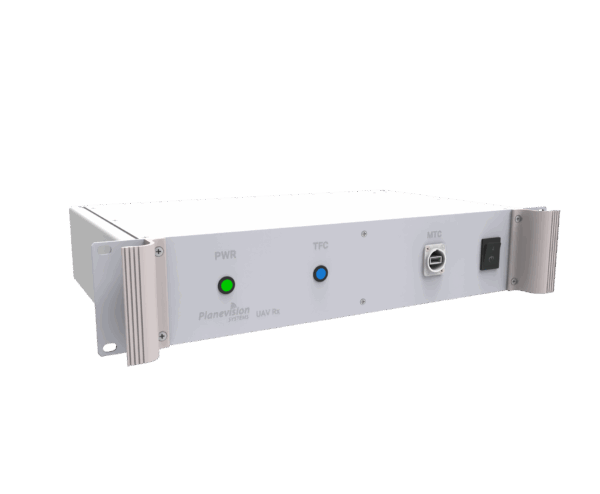
DroneTRack is a cost-efficient, professional receiver ground station tailored for monitoring position and other data from UAVs and small aircraft.
-
DroneTRack
DroneTRack is a cost-efficient, professional receiver ground station tailored for monitoring position and other data from UAVs and small aircraft.