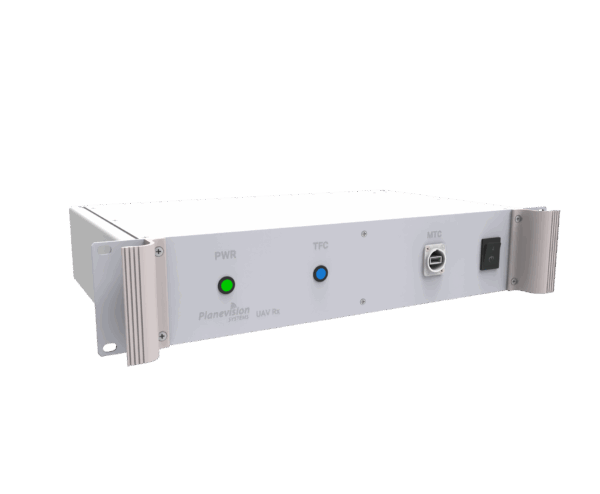

Universal Access Transceiver – 978 MHz
Introduction
Universal Access Transceiver (UAT) is a datalink technology operating on the 978 MHz frequency band, originally developed for aviation surveillance and communication in the United States. UAT serves as an alternative to the 1090 MHz Extended Squitter (1090ES) system for ADS-B compliance, providing general aviation pilots with a cost-effective path to meet surveillance mandates while receiving valuable free services not available on 1090ES.
Unlike 1090ES, which shares frequency with Mode S transponders used worldwide, UAT operates on a dedicated frequency specifically allocated for aviation data services. This dedicated spectrum enables UAT to support not only ADS-B position broadcasting but also uplink services that deliver weather information and traffic data directly to the cockpit — capabilities that have made UAT particularly popular among general aviation pilots.
In a historic development, the United Kingdom became the first country outside the United States to authorize 978 MHz UAT in March 2025, specifically for drone operations. This decision marks a significant expansion of UAT beyond its American origins and signals growing international recognition of the technology’s value for unmanned aircraft systems.
Key Advantage: UAT provides free FIS-B weather and TIS-B traffic services in the cockpit — benefits that 1090ES alone cannot offer — and is now expanding internationally for drone applications.
History and Development
The development of UAT began in the late 1990s as the FAA explored options for implementing ADS-B across the diverse U.S. aviation fleet. While 1090ES was the logical choice for air carriers already equipped with Mode S transponders, the general aviation community — with its large fleet of smaller, often older aircraft — needed a more affordable solution.
In 2002, the FAA announced its dual-link decision, establishing a two-frequency approach to ADS-B: 1090ES for aircraft operating at and above 18,000 feet (Class A airspace) and high-performance aircraft, and 978 MHz UAT for aircraft operating below 18,000 feet. This decision recognized the different needs and economic realities of commercial aviation versus general aviation.
The technical standards for UAT were developed through RTCA Special Committee 186 and published as DO-282, with subsequent revisions (DO-282A and DO-282B) refining the specifications. These standards define the Minimum Operational Performance Standards (MOPS) for UAT equipment. The current standard is DO-282B, with DO-282C expected to become the reference standard from 2027.
The ADS-B mandate that took effect on January 1, 2020, required aircraft operating in most controlled U.S. airspace to be equipped with ADS-B Out. For general aviation aircraft operating below 18,000 feet, UAT became the predominant choice due to its lower cost and additional benefits.
How UAT Works
UAT operates as a bidirectional datalink, supporting both ground-to-air (uplink) and air-to-ground/air-to-air (broadcast) communications. This bidirectional capability distinguishes UAT from 1090ES, which only supports aircraft broadcasts without any uplink services.
System Architecture
The UAT system consists of three main components working together:
Aircraft Equipment: UAT transceivers aboard aircraft receive GPS position data and broadcast ADS-B Out messages. Transceivers with ADS-B In capability can also receive broadcasts from other aircraft and uplink services from ground stations.
Ground Infrastructure: A network of ground stations receives UAT broadcasts for surveillance purposes and transmits uplink services (FIS-B and TIS-B) to equipped aircraft.
ADS-B Services: Automation systems process the surveillance data and, where TIS-B is needed, generate traffic broadcasts to provide a complete traffic picture regardless of which frequency individual aircraft use.
Message Transmission
UAT uses a time-division structure that organizes transmissions into one-second frames. Each frame is divided into segments for different purposes:
- Ground Uplink Segment (GUS): Reserved for FIS-B and TIS-B transmissions from ground stations
- ADS-B Segment: Reserved for aircraft ADS-B broadcasts
- Guard Times: Buffer periods (6-12 milliseconds) that allow for signal propagation and timing synchronization
Within the ADS-B segment, transmissions are organized into Message Start Opportunities (MSOs) spaced 250 microseconds apart. Each aircraft randomly selects an available MSO for its transmission, using a listen-before-transmit approach to minimize collisions.
Technical Specifications
Radio Characteristics
| Parameter | Specification |
|---|---|
| Frequency | 978 MHz |
| Bandwidth | Approximately 1.3 MHz |
| Modulation | CPFSK (Continuous Phase Frequency Shift Keying) |
| Bit Rate | 1.041667 Mbps |
| Frequency Deviation | ±312.5 kHz (625 kHz separation between 0 and 1) |
| Symbol Period | 0.96 microseconds |
| Update Rate | Once per second (ADS-B position) |
Message Structure
UAT messages contain information similar to 1090ES ADS-B but in a different format optimized for the higher bandwidth available on 978 MHz. The basic ADS-B message includes aircraft address (24-bit ICAO identifier), position (latitude, longitude, altitude), velocity (ground speed, vertical rate, heading), aircraft identification (callsign or tail number), quality indicators (NACp, NACv, NIC, SIL), and aircraft category with operational status.
The higher data rate of UAT compared to 1090ES allows for longer messages with additional content, including the auxiliary state vector with vertical rate and heading information in every transmission.
UAT Services: FIS-B and TIS-B
One of UAT’s most significant advantages over 1090ES is its support for uplink services that deliver valuable information directly to the cockpit — completely free of charge.
FIS-B: Flight Information Service – Broadcast
FIS-B delivers real-time weather and aeronautical information to equipped aircraft, including NEXRAD radar imagery (composite and regional precipitation updated every 2.5-5 minutes), METARs and TAFs from airports within the coverage area, PIREPs (pilot weather reports), SIGMETs and AIRMETs, NOTAMs, winds and temperatures aloft, and temporary flight restrictions (TFRs).
This information, which would otherwise require expensive satellite weather subscriptions, is broadcast continuously by FAA ground stations to any aircraft equipped with a UAT receiver — making FIS-B one of the most compelling reasons for general aviation pilots to choose UAT.
TIS-B: Traffic Information Service – Broadcast
TIS-B addresses the interoperability gap between UAT and 1090ES-equipped aircraft. Since UAT receivers cannot directly receive 1090ES transmissions (and vice versa), TIS-B ground stations serve as intermediaries — receiving ADS-B transmissions from both frequency bands and rebroadcasting traffic information so pilots with ADS-B In capability can see a comprehensive traffic picture including aircraft on the other frequency.
UAT vs. 1090ES Comparison
| Characteristic | 978 MHz UAT | 1090 MHz ES |
|---|---|---|
| Frequency | 978 MHz (dedicated) | 1090 MHz (shared with Mode S) |
| Altitude Limit (US) | Below 18,000 ft MSL | No limit |
| Geographic Use | US (manned); UK (drones from 2025) | Worldwide |
| Weather Services | FIS-B included (free, US only) | Not available |
| Traffic Uplink | TIS-B included | TIS-B (requires UAT ground infrastructure) |
| Spectrum Congestion | Significantly underutilized | Can become congested in high-traffic areas |
| Drone Applications | Authorized (UK BVLOS from 2025) | Standard use |
UK Adoption: UAT for Drones
In a landmark decision, the UK Civil Aviation Authority (CAA) and Ofcom jointly announced on March 11, 2025, that 978 MHz would be made available for airborne transmission onboard Unmanned Aircraft Systems (UAS). This represents the very first authorization of 978 MHz UAT ADS-B outside of the United States, placing the UK at the forefront of global aviation technology.
Regulatory Framework
The authorization was implemented through a Supplementary Amendment to CAP 1391 (Electronic Conspicuity Devices), which authorizes the use of 978 MHz UAT for airborne transmission onboard UAS applications under the RTCA minimum performance standards DO-282B. The CAA expects DO-282C to become the standard from 2027.
Ofcom introduced a new UAS Operator Radio licence to authorize the use of radio equipment on drones. This licence covers all drones a company or individual operates in the UK and territorial waters, with an annual fee of £75 and indefinite duration subject to payment.
Purpose and Benefits for Drones
The use of UAT on 978 MHz brings significant advantages for Beyond Visual Line of Sight (BVLOS) drone operations. UAT allows drones to be “seen” by other aircraft and provides necessary tracking and communication capabilities over long distances, reducing the risk of mid-air collisions. This is essential for BVLOS operations where the drone pilot cannot rely on direct visual observation.
A key factor in choosing 978 MHz for UAS is that the frequency is significantly underutilized compared to the congested 1090 MHz band used by commercial aviation. This makes it an ideal frequency for safely accommodating emerging drone operations without adding burden to existing manned aviation surveillance infrastructure.
Technical Requirements
Under CAP 1391, Specific Category UAS operating BVLOS in non-segregated airspace must be equipped to both transmit on 978 MHz UAT and receive ADS-B on both 1090 MHz and 978 MHz for proper situational awareness. This dual-receive requirement ensures drone operators can see all equipped traffic regardless of which ADS-B frequency other aircraft use.
Spectrum Sharing Changes
To accommodate UAT operations, Ofcom and the CAA agreed to update spectrum availability for Programme Making and Special Events (PMSE) equipment. Low-power radio microphones will no longer be licensed for outdoor events between 976.5 and 979.5 MHz. Indoor PMSE use continues, as the likelihood of interference into UAT in indoor situations is negligible.
Future Developments
The UK’s adoption of 978 MHz UAT for drones represents a potential inflection point for the technology’s international expansion. As other countries observe the UK’s implementation and its support for safe BVLOS operations, additional jurisdictions may follow suit, particularly for UAS applications where the underutilized 978 MHz spectrum offers advantages over the congested 1090 MHz band.
The CAA’s CAP 3182 – Future of Flight: BVLOS Roadmap sets a clear direction for routine BVLOS operations by 2027 across priority use cases including NHS medical deliveries, emergency services, and infrastructure inspection. UAT equipage requirements are central to this roadmap, with ADS-B In/Out on both 978 MHz and 1090 MHz progressively moving from trials to standard approvals.
In the United States, the FAA continues to invest in UAT ground infrastructure, and the general aviation community remains committed to the technology. Potential future developments include enhanced FIS-B products with additional weather content, improved TIS-B coverage, and integration with unmanned traffic management (UTM) systems.
Conclusion
UAT represents a versatile aviation surveillance technology that has proven its value for general aviation in the United States and is now expanding internationally through drone applications. For U.S. pilots operating domestically below 18,000 feet, UAT offers unmatched value through free weather and traffic services. For the emerging drone industry, particularly in the UK, 978 MHz UAT provides a dedicated, underutilized frequency band ideally suited for safe BVLOS operations.
The UK’s historic decision to authorize 978 MHz UAT in March 2025 signals that this technology may have a broader international future than previously anticipated. As drone operations become increasingly sophisticated and widespread, the demand for reliable electronic conspicuity solutions that don’t burden existing manned aviation infrastructure will only grow — positioning UAT as a key enabler for the future of integrated airspace.
Historic Milestone: The UK’s March 2025 authorization of 978 MHz UAT for drones marks the first international adoption of this technology outside the United States — a potential turning point for UAT’s global relevance.
Our products for UAT
-

DroneTRack UK Version (incl. UAT)
DroneTRack is a cost-efficient, professional receiver ground station tailored for monitoring position and other data from UAVs and small aircraft.
-
DroneTRack
DroneTRack is a cost-efficient, professional receiver ground station tailored for monitoring position and other data from UAVs and small aircraft.